

From survey to installation: four distinct stages
Survey: assess the staircase, the user’s seated position, doors and transfer areas.
Specification: agree the model, rail route, options and full installed price.
Supply: confirm stock or bespoke rail manufacture and any preparation needed.
Fitting and handover: install, test and demonstrate the equipment.
For HomeGlide and Flow X, the rail is attached to the staircase rather than the wall. The suitability of the steps and supporting structure still needs checking. Let the surveyor know about loose treads or planned flooring changes before measurements are finalised.
How long does fitting a stairlift take?
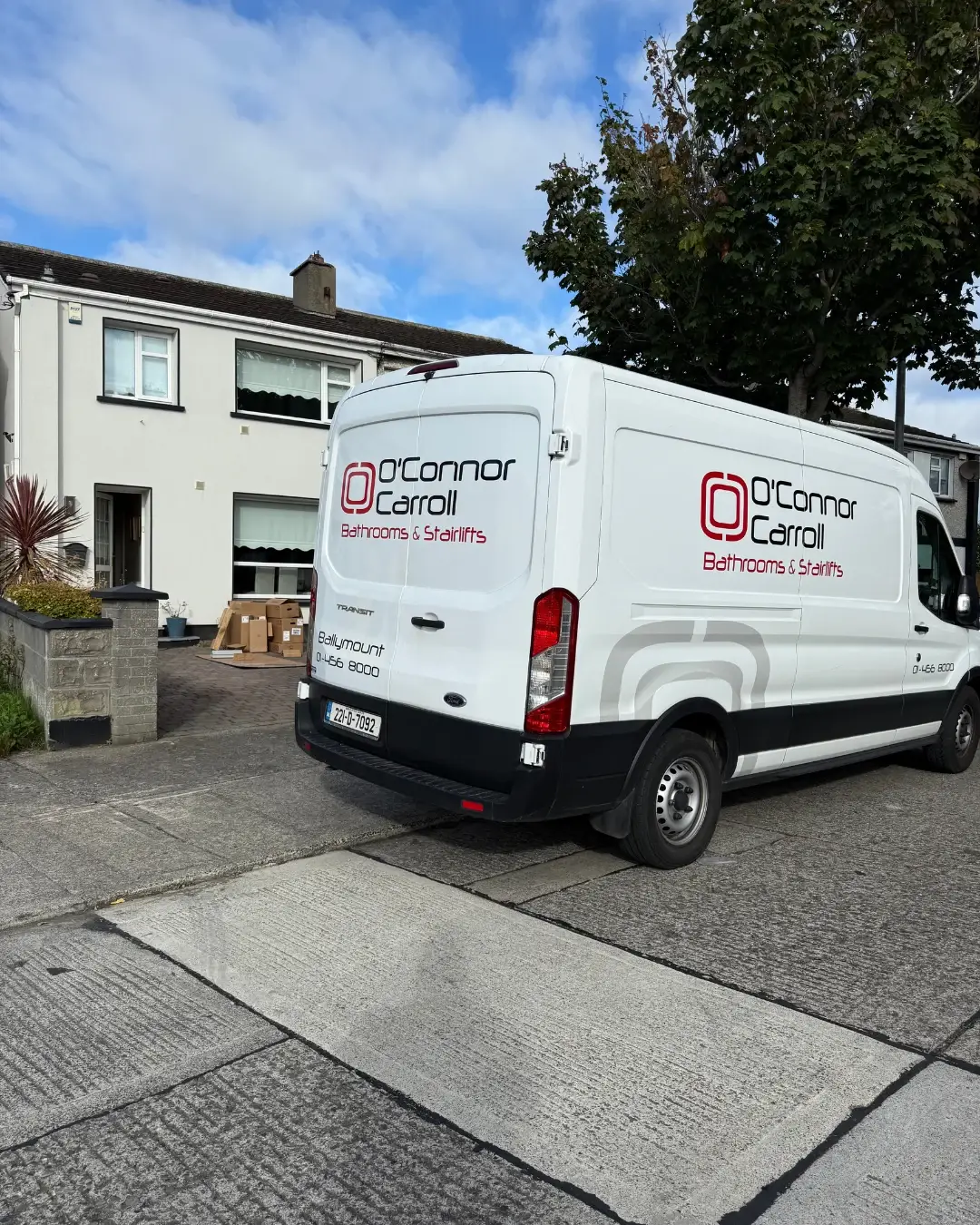
O’Connor Carroll’s straight-lift information describes installation in a few hours. That is fitting time, not a guaranteed interval between your first phone call and a working lift. Availability, rail preparation and access can change the schedule.
A curved rail has to match the agreed route. Treat the supply lead time and the installation visit as separate dates, and obtain both for the equipment you choose. If work is funded by a council grant, the approval and completion deadline also form part of the timetable.
Reference: O’Connor Carroll’s installation information. Use the before, during and after checklist to prepare for the confirmed appointment.
Prepare the route
Agree how the team will access the property and which parts of the stairs and hall need to be clear. Move loose items in advance where practical, and plan how the household will manage access during the work. Ask who is responsible for protecting and reinstating any affected finishes.
Do not change the staircase after the survey without discussing it. Alterations to flooring, doors or handrails can affect the agreed layout.
Do not rush the first journey
Before the fitter leaves, practise sitting, fastening the belt, using the control, swivelling and standing at the landing. Have parking and charging explained, including any folding rail. The person who will use the lift should lead this demonstration, with a relative or carer present if helpful.
Keep the operating instructions, model details, warranty and service contact together. Ask what the normal display looks or sounds like, what an obstruction stop means and which checks are safe for the user. Never improvise a reset or bypass a safety device.
Agree any follow-up questions before signing off the handover. For ownership planning, see servicing and getting repair help.