
A rail planned around your home
Curved stairlifts follow stairs with bends, corners or changes of direction. The rail route is planned around the staircase, including the beginning and end of the journey. A half landing, a winding turn or a doorway near the bottom can change the design.
The survey records more than the number of steps. It examines the available space while the lift is moving, where the seat can park, and how the user will get on and off. This is why two curved staircases can need different rail arrangements.
Flow X: a practical option for turning stairs
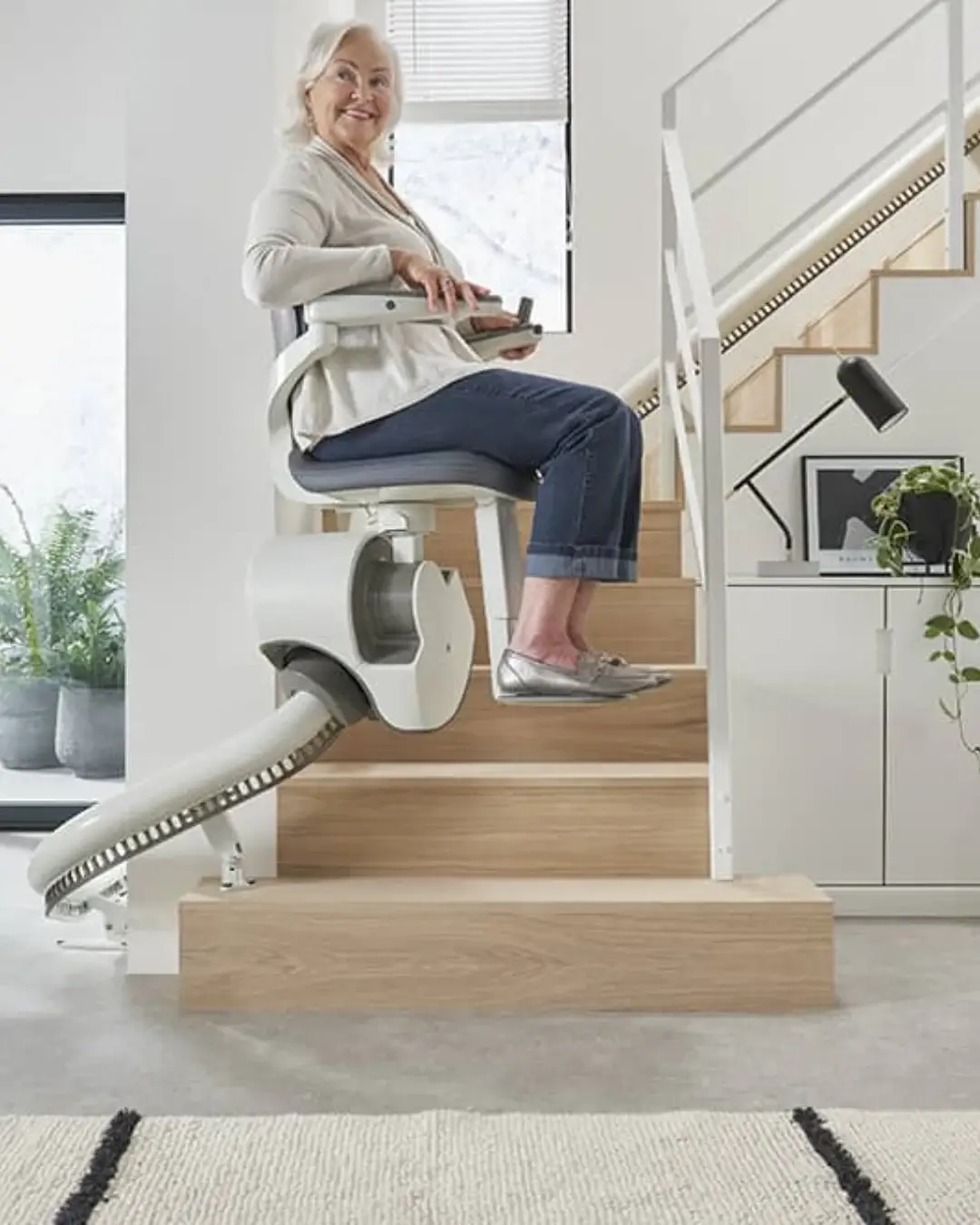
The Flow X curved stairlift uses a single rail and a seat that can swivel while travelling. Its Advanced Swivel and Levelling system helps manage the occupied space through turns. This is especially relevant where a conventional fixed seat position leaves limited knee clearance.
Access BDD lists a 125 kg capacity and suitability for some staircases as narrow as 610 mm. These are model limits, not a promise of fit: the survey must check your body position, the complete route and both transfer areas. Read the narrow staircase guide before using any minimum width to make a decision.
See manufacturer specifications and the product video for the way the seat moves.
What changes the price and delivery time?
A 90-degree turn, a 180-degree landing and several winding steps create different rail designs. Rail length, the number and shape of bends, parking extensions and seat options affect the installed cost. A curved lift therefore needs a measured quotation, rather than a price based only on the chair.
There are three separate stages: survey and approval of the route; rail supply or manufacture; installation and demonstration. The fitting appointment may be relatively short even when the rail takes longer to supply. Confirm the current dates for your specification before arranging other work.
Make any planned changes to flooring, doors or the staircase known before the final measurement. Compare the written proposal using our quotation checklist.
Mary’s Flow X installation in Rathgar
Mary O’Reilly wanted to keep using the home she knew with less worry about the stairs. O’Connor Carroll supplied and fitted a Flow X around her staircase. Her story focuses on the result that mattered to her: renewed independence and peace of mind.
The before-and-after photographs show the rail following the stairs and the seat positioned at the lower end. They also make an important design point: a stairlift becomes part of the hallway, so its start position needs as much attention as the bends above it.
Read Mary’s installation story and explore the Flow X demonstration and features. Your own rail route will be assessed separately.