

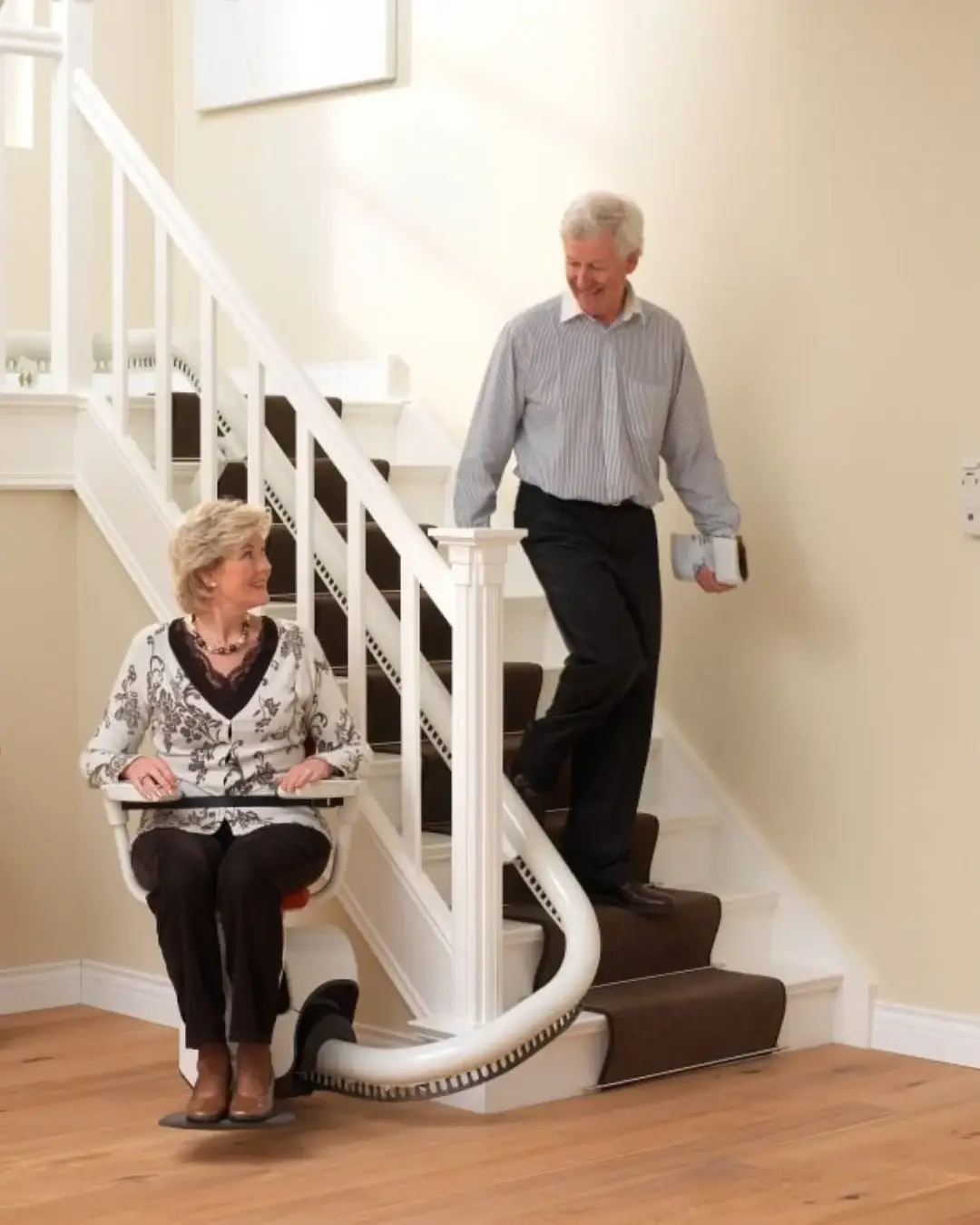
Start with your parent’s priorities
Ask which parts of home they most want to keep using and what makes the stairs difficult now. The answer may be an upstairs bedroom, privacy, or simply not having to plan the day around climbing a flight. Let that set the purpose of the conversation.
A useful opening is: “Would you like to try one and see how it feels?” This gives room to explore without turning a demonstration into a commitment. Agree whether they want you to arrange the callback, attend the survey or help compare quotes.
Mary’s Rathgar story offers one personal example of choosing a lift to remain at home. It is a conversation starter, not a reason to assume someone else wants the same solution.
Test the whole routine, not just the ride
During a demonstration, allow time to approach the chair, sit down, fasten the belt, hold the control and get off at the landing. Check whether the person can do the movements comfortably and understands the controls.
Discuss where a walking aid is needed on each floor and who else uses the staircase. A lift is only part of the access route. If transfers or the suitability of a seated lift are uncertain, seek an occupational therapist’s assessment alongside the technical survey.
Make a short list together: essential features / preferences / questions still open. This is more useful than selecting the most expensive model on the assumption it must be best.
Try the details in person
A demonstration can help make the product less abstract. Allow time to understand the belt, control, swivel and footrest. Ask which assistance would be needed and whether the proposed features address the movements that are difficult.
If travelling to the showroom is challenging, discuss the available assessment arrangements with the team first.
Agree the decision and the follow-through
Decide who will review the written quote, who is paying and who should receive appointment calls. Give your parent time to compare the recommendation and ask questions in their own words. Avoid making the purchase a surprise.
Plan for installation day: who will attend the demonstration, where instructions will be kept, and how support will be contacted if needed. If a grant is involved, coordinate the application before booking work.
Use the quotation checklist and survey guide together. You can request an initial callback without already knowing the model.