
Weight limits: check the model and configuration
The limit is for the complete installed configuration, not simply a brand name. Access BDD publishes these figures:
Flow X: 125 kg.
HomeGlide: 160 kg at inclines up to 45°; 136 kg at inclines up to 53°; 145 kg with a hinge configuration.
The highest HomeGlide figure must not be applied to every rail or incline. The survey and final specification should establish which limit applies. Never exceed the installed lift’s rating.
Sources: HomeGlide specifications and Flow X specifications, checked 13 October 2026. Follow the rating and instructions supplied with your own equipment.
Seat dimensions and comfort are separate checks
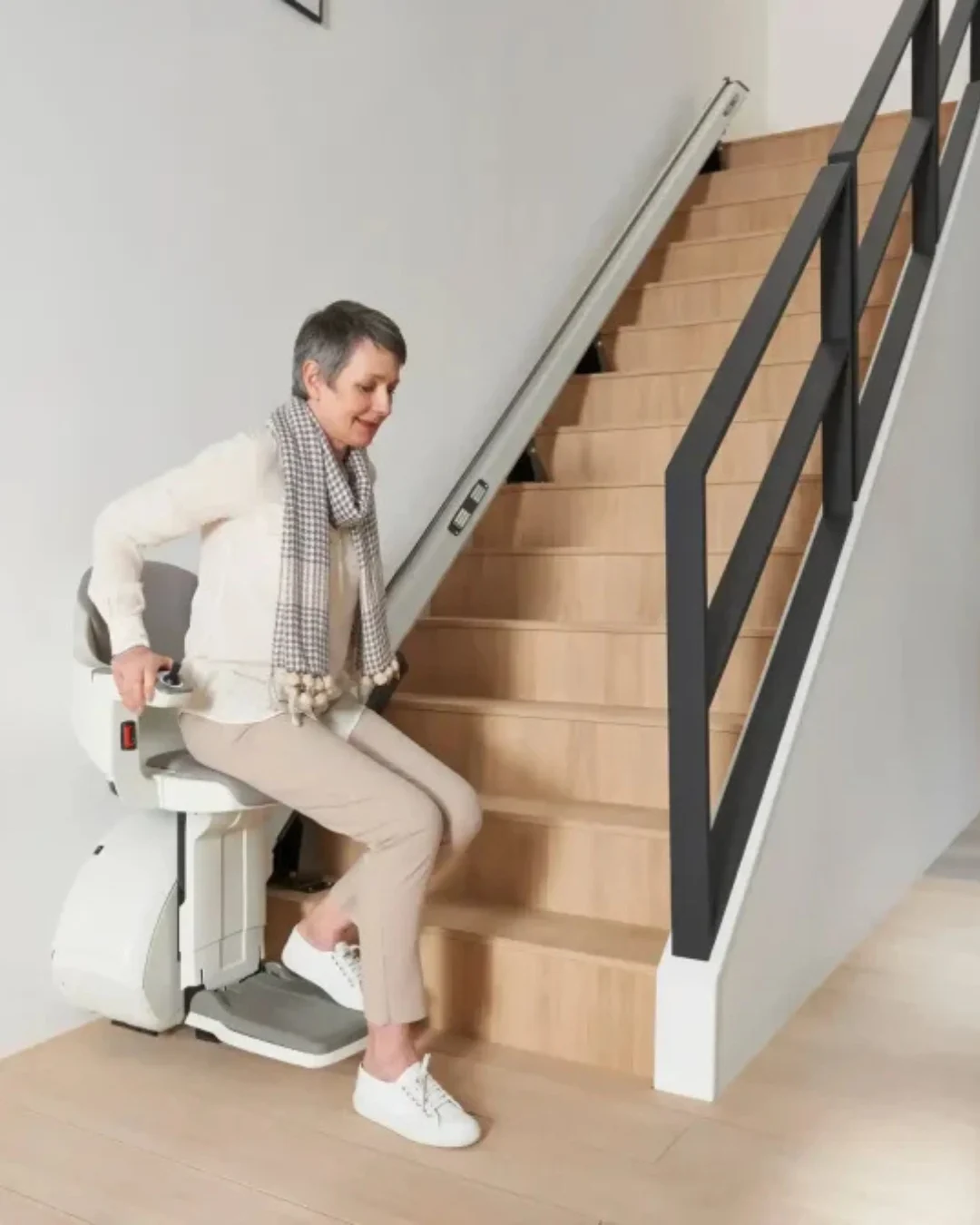
Flow X’s published seat height is adjustable between 515 and 585 mm in four positions, measured from the floor to the top of the seat. Its footrest is available in two sizes with five adjustment positions. HomeGlide Extra also offers four seat-height settings; confirm the actual dimensions for the offered version.
A weight limit does not tell you whether the seat width, depth or armrest spacing will feel right. Do not infer those measurements from a photograph. Try the chair with your normal clothing and footwear, with feet supported and the belt fastened.
Use the product guides for Flow X and HomeGlide, then arrange a demonstration to assess the fit.
The seated space that matters on the stairs
The assessor needs to consider knees and feet during the whole journey, not just the chair’s empty footprint. Turns, walls and banisters can restrict space. Seat height also affects sitting down and standing up at a landing.
Explain any difficulty bending, reaching the control, fastening the belt or turning. Where transfer needs are uncertain, an occupational therapist can advise alongside the supplier’s technical assessment. A conventional seated stairlift requires a suitable transfer routine; it does not carry a wheelchair in the way a platform or home lift can.
Read stairlift versus home lift if remaining in a wheelchair during travel is important.
Confirm the final proposal
Ask the supplier to identify the seat and options on the quotation. Try a demonstration where possible and make sure the home survey checks the available space with the proposed configuration. The decision should connect the specification to the person and the staircase.