
Stairlift or home lift: begin with the journey
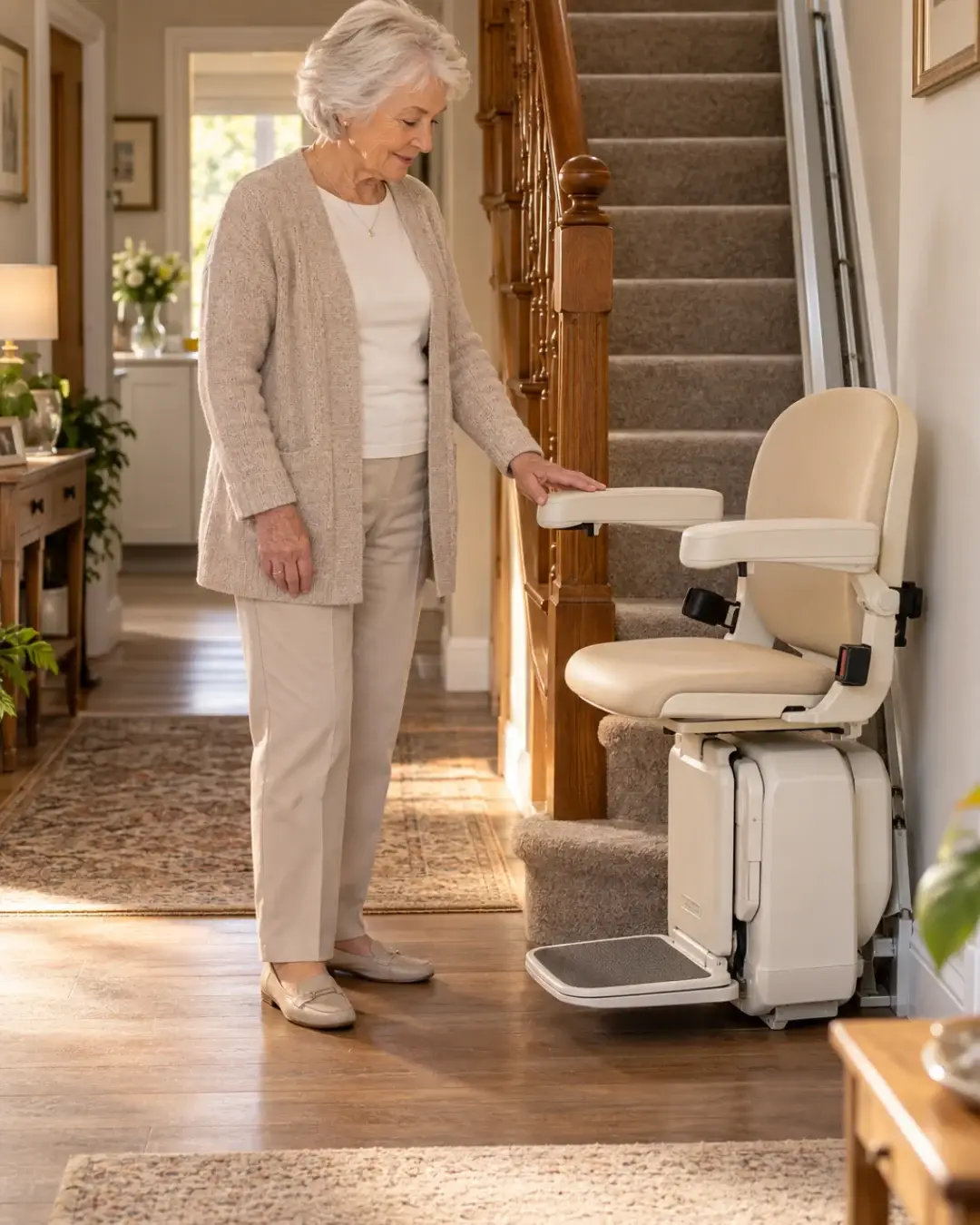
A seated stairlift carries a person along the stairs on a chair. A home lift moves between levels in a lift enclosure or platform arrangement, depending on the design. If the person needs to remain in a wheelchair during travel, a conventional seated stairlift may not meet that need.
The decision starts with access and transfers: how the person approaches, boards and leaves the equipment on each floor. An occupational therapist’s input can be useful where these movements are uncertain. The building assessment then determines which solutions are physically feasible.
This comparison explains the questions to resolve; it does not establish that either type is suitable for a particular home without assessment.
Compare space and building work
Stairlift: assess the existing staircase, the rail and chair footprint, room for other people and transfer space at the landings.
Home lift: assess the proposed lift position, floor openings or shaft requirements, structural work, services and the relevant building requirements. A specialist must establish what applies to the actual design.
Both options need clear access at the start and finish. Neither should be selected on a product’s footprint alone. A compact device can still need substantial surrounding space for a wheelchair, carer or safe transfer.
Our narrow staircase guide explains why a single width measurement is insufficient.
Compare the complete project, not only equipment
Include assessment, supply, installation, building and electrical work, finishing, servicing and support. Identify who manages each part and whether separate trades or permissions are needed. Two equipment prices may cover very different amounts of work.
Also compare the daily routine: who operates the controls, where mobility aids are kept, what happens during an outage and how help is requested. Ask each supplier to demonstrate the proposed journey.
O’Connor Carroll can discuss its stairlift options and their suitability. If the assessment points towards a different access solution, obtain the relevant specialist advice rather than forcing a stairlift choice. Start with the access you need.
Get the appropriate advice
O’Connor Carroll can discuss its stairlift options and assess the stairs. This guide does not imply that every home-lift type is supplied by the business. If another form of access is more appropriate, seek a suitable specialist assessment before committing to equipment.